

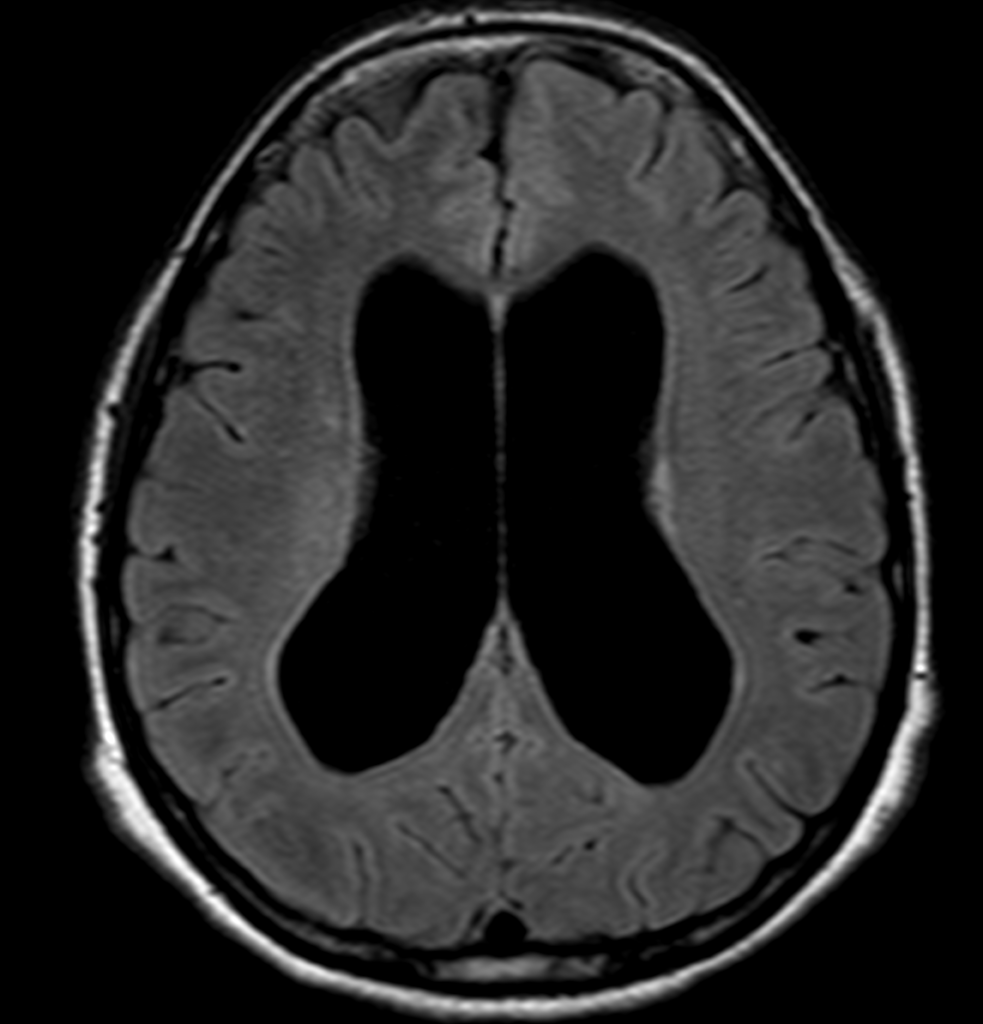
Hydrocephalus (hydrocephalus) is a disease characterized by excessive accumulation of cerebrospinal fluid in the ventricular system of the brain. (can be open, occlusive, resorptive, hypertensive, normotensive) This condition can be caused by the following factors:
– violation of absorption of cerebrospinal fluid, as a result of hemorrhage, craniocerebral trauma, inflammatory process.
– excessive production of liquor
– as a result of a block or violation of the flow of cerebrospinal fluid between the ventricles of the brain (may be caused by a tumor, an inflammatory process, a congenital anomaly, brain cysts).
Hydrocephalus is manifested by: headache, nausea, impaired balance and coordination of movements, impaired memory, urinary incontinence, confusion.
Treatment of hydrocephalus is surgical and aimed at normalizing intracranial pressure and eliminating the main cause of the disease (a possible block, establishing a normal flow of cerebrospinal fluid between the ventricles of the brain). In our clinic, we perform operations aimed at eliminating hydrocephalus, depending on its type, namely, in the case of a block of the normal flow of cerebrospinal fluid between the ventricles of the brain, we use an endoscopic technique – endoscopic triventriculostomy (ETV – perforation of the bottom of the third ventricle, thereby bypassing the blockage). The advantage of this method is low trauma and the absence of a ventriculo-peritoneal shunt, which is associated with frequent dysfunctions in
in the future In the event that the obstruction is caused by a tumor (blocking the drug-conducting pathways), we remove the tumor together with the ETV without using shunting systems for ventriculo-peritoneal shunting. Ventriculo-peritoneal shunting (establishing the flow of cerebrospinal fluid from the ventricular system into the abdominal cavity using a shunt) is performed only in cases of open hydrocephalus.